
The One-Sentence Rule
If the garage door doesn't close or open smoothly, the fix is almost never to crank up the force setting—force and travel limits are supposed to match the door's actual condition, not override it. The exception: a brand-new opener installation or a door that's just had springs, cables, or rollers replaced genuinely needs the limits reset to match the new hardware. Outside of that, if you're turning the force dial because the door is struggling, you're treating a symptom instead of the problem.
What Force and Travel Limits Actually Do
Every modern opener has two separate settings, even though people lump them together:
- Travel limits tell the opener exactly where "fully open" and "fully closed" are. Set them wrong and the door stops short, reverses before it touches the floor, or slams the last few inches.
- Force settings tell the opener how much push or pull to use before it decides something is blocking the door and should reverse. This is the safety feature that's supposed to stop a door (or a person, pet, or car) from getting crushed.
These settings exist because every door has a different weight, spring tension, and amount of resistance in the track. The opener isn't supposed to muscle through resistance—it's supposed to recognize resistance as a sign something's wrong.
Why Turning Up the Force Is the Wrong Fix
When a door gets harder to lift—because a spring is weakening, rollers are dry, or the track is slightly bent—the opener starts struggling too. The tempting fix is to increase the force setting so the motor pushes harder and "gets past" the resistance. That does work, temporarily. It also means:
- The safety reversal feature becomes less sensitive, so the door is less likely to stop if it hits an object, a pet, or a person.
- The extra strain accelerates wear on the opener's gears, belt, or chain.
- It masks a real mechanical problem—usually spring tension or track alignment—that keeps getting worse underneath the higher force setting, until something snaps instead of just sticking.
In other words, cranking the force doesn't fix the door. It just makes the opener work harder to hide the fact that the door needs attention.
How This Plays Out in Tucson Conditions
Local weather swings make this more than a theoretical problem. Summer heat cooks factory lubricant on rollers and hinges until it turns gummy, adding resistance right when garage temperatures are highest and the opener motor is already working harder in the heat. Cooler nights this time of year cause metal components to contract slightly, which can reveal a track that was already a little out of alignment but wasn't obvious before. Monsoon dust works into tracks and bearings and adds friction. UV exposure on panels and weatherstripping can cause warping over time, changing how evenly the door sits in the track. Any one of these can make a door feel "heavier" to the opener—exactly the moment someone reaches for the force dial instead of asking why the door suddenly needs more push.
How to Tell If Your Settings Are Actually Wrong
Signs worth settling the argument over:
- The door reverses randomly, even with nothing in the way—often a travel limit or sensitivity issue.
- The door closes, hits the floor hard, or bounces back up—usually a travel limit set too aggressively.
- The opener strains audibly, slows down mid-cycle, or the motor runs noticeably hotter than usual—a sign the force is compensating for a mechanical problem, not a settings problem.
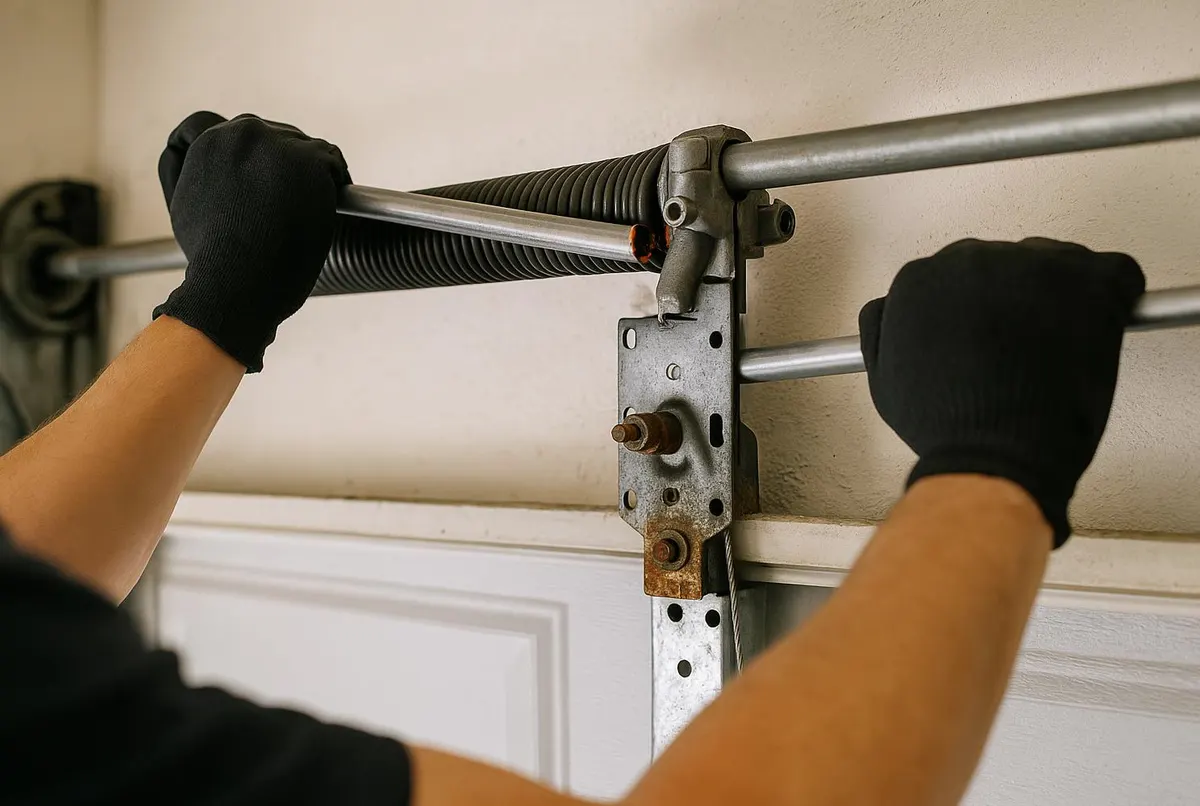
- You can lift the door by hand (with the opener disconnected) and it's heavy, uneven, or doesn't stay put halfway—that's a spring issue, not something any force setting should be covering for.
That last test is the real tiebreaker: a properly balanced door should move smoothly by hand and hold its position. If it doesn't, the opener's settings aren't the problem.
When to Call Precision Garage Door of Tucson
If the door feels heavier than it used to, the opener is straining, or the force has been adjusted more than once to compensate for the same symptom, it's time for a real diagnosis instead of another dial turn. Precision Garage Door of Tucson's opener services include checking and resetting force and travel limits correctly after inspecting the door's actual balance and hardware condition. If the root cause turns out to be spring tension or worn rollers, our spring replacement and maintenance visits address that directly, rather than asking the opener to push through it.
If your opener has been fighting your garage door lately, let's find out why instead of guessing. Call Precision Garage Door of Tucson to get it checked and set correctly.