
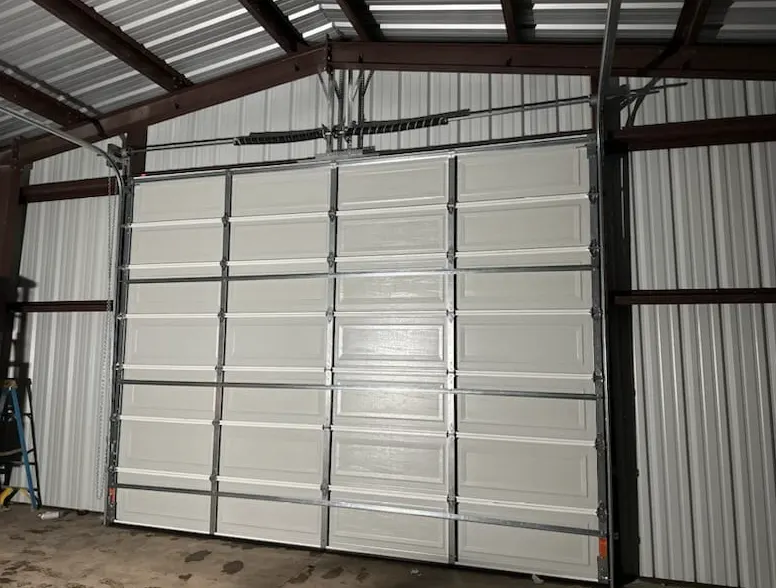
Rule of thumb: the more glass in your garage door, the more light and curb appeal you get, and the more heat, UV damage, and security exposure you take on in return. The exceptions matter, though. A detached workshop garage with no AC benefits from windows more than it suffers from them, since you need the daylight and you're not paying to cool that space anyway. A door that faces a busy street or sits close to a neighbor's sightline needs privacy glass regardless of how much light you want. And a garage that's really a second living space — a gym, a studio, a home office conversion — should be treated like a room with windows, not a door that happens to have some.
What to Look For
Glass type, not just glass
Not all window inserts are glass at all. Many are acrylic or polycarbonate, which resist cracking from a stray bump or hail far better than real glass. In a climate with monsoon winds that can fling gravel and debris, impact-resistant acrylic is worth asking about even if it costs a bit more.
UV-resistant or tinted panes
Tucson sun doesn't just fade paint and upholstery — it degrades plastics, rubber seals, and the window frame itself over time. A tinted or UV-coated insert slows that fading and keeps the garage interior from turning into a greenhouse during the hottest stretch of the year. Clear glass with no coating will look great for a season or two and then start to yellow or craze.
Insulated (dual-pane) inserts
If your garage door is insulated, a single-pane window insert undoes a chunk of that work — glass conducts heat far faster than a foam-core steel panel. Dual-pane or insulated glass units close that gap. This matters most if the garage backs up to a living space, houses a workshop you use year-round, or has a mini-split or window unit cooling it.
Placement
Windows set higher on the top panel let light in without giving anyone at eye level a clear view of your tools, vehicles, or valuables. It's a simple design choice that solves most privacy concerns without touching the glass itself.
Obscure or frosted glass
Frosted, seeded, or textured glass lets daylight through while blurring what's visible from outside. For doors visible from the street or a neighboring yard, this is usually the better default over clear panes, decorative grids aside.
What to Ignore
- Decorative grid patterns and faux hardware. These are purely aesthetic add-ons bolted onto the window frame. They don't affect insulation, security, or durability, so choose them based on what matches your house — not as a factor in your buying decision.
- Vague "energy-efficient" marketing claims with no numbers attached. If a window insert is advertised as energy-efficient but the seller can't give you an R-value or tell you whether it's single- or dual-pane, treat that as a red flag rather than a selling point.
- Window count as a security measure in itself. More small windows doesn't mean more ventilation or airflow for your garage — garage doors don't work that way. Don't choose a style based on a feature it doesn't actually have.
Security and Privacy Trade-offs
Windows near the top of the door rarely create a security problem — they're too high and too small for anyone to reach through or see much through at an angle. Windows placed lower, especially full-width styles that run across a middle panel, are a different story. If your garage houses tools, bikes, or a second vehicle people might want to know about, skip the low-set clear panels or at minimum go with frosted glass there. Laminated glass, which holds together when cracked instead of shattering out, is worth asking about for any insert within reach from the ground.
Insulation Reality Check
In a desert climate, the insulation conversation runs backward from what most people expect — you're usually fighting to keep heat out, not in, for most of the year, with a handful of genuinely cold desert nights in winter where you want the opposite. Either way, glass is the weak point in the door's thermal performance. If you're installing a new insulated door and want windows, ask specifically for dual-pane inserts rated to match the door's overall R-value. A single-pane window in an otherwise insulated door is like putting a storm door with no glass — most of the benefit leaks out right where the window sits.
Questions to Ask Before You Buy
- Is this insert single-pane or dual-pane, and does it come with a stated R-value or U-factor?
- Is the glass tempered or laminated, and is there a UV coating or tint option?
- Is the frame sealed well enough to keep out wind-driven dust and monsoon rain, or will it need extra caulking after install?
- Can the window panel be replaced individually if it cracks, or does the whole section need to be swapped?
- What placement options are available for this door style, and can I see a frosted or obscure sample before deciding?
When to Call Precision Garage Door of Tucson
If you're shopping for a new door and want windows built in from the start, our Garage Door Installation team can walk you through insert options that actually hold up to Tucson sun and monsoon dust rather than just looking good in a showroom. If you already have a door with a cracked, fogged, or yellowed window panel, our Garage Door Repair service can often replace just that section without requiring a full door swap. Either way, we'll tell you honestly whether a given window style is a good fit for your garage's exposure and how you use the space — not just sell you whatever's in stock.
Thinking about adding windows to your garage door, or need a cracked panel fixed? Call Precision Garage Door of Tucson today and we'll get you a straight answer and a solid door, serving Tucson, Marana, Oro Valley, Sahuarita, Green Valley, Vail, Catalina Foothills, and South Tucson.